What to Do After Hitting a Deer in North Florida
Deer collisions peak in October through December across the Florida Panhandle. Here's exactly what to do at the scene, how your insurance covers it, and why deer strikes often cause more structural damage than they appear.
North Florida Has One of the Highest Deer Collision Rates in the Southeast
Jackson County and the surrounding Florida Panhandle region consistently rank among Florida's most active areas for deer-vehicle collisions. The peak window is October through December — when breeding season pushes deer to cross roads at dawn and dusk more frequently than any other time of year. US-90, SR-71, SR-73, and the county roads connecting Marianna to Chipley, Bonifay, and Blountstown all see elevated deer activity throughout fall and early winter.
If you've hit a deer — or something moved into your path and you're not sure what happened — this guide walks you through exactly what to do next.
Step 1: Get Safe First
Do not swerve sharply for a deer in the road. More accidents are caused by drivers overcorrecting than by the collision itself. If a strike is unavoidable, brake firmly and keep control of your vehicle.
After the collision, turn on your hazard lights, pull off the road if possible, and check all occupants for injuries. Do not approach an injured deer — a frightened animal can cause serious harm even when badly hurt. Call 911 if anyone is injured or if the animal is blocking the road.
Step 2: Document Everything Before You Move the Vehicle
Take photos of your vehicle from multiple angles — including underneath if accessible — and photograph the roadway, any debris, and the deer if it's visible from a safe distance. This documentation matters for your insurance claim. If you have to move for safety, photograph from your new position as well.
You don't need a police report for an insurance claim in every case, but having one strengthens your claim and is useful if there's any question about the incident. In Florida, a report is required for any accident involving injury or significant damage, so call it in when in doubt.
How Insurance Covers Deer Strikes — It's Not Collision Coverage
This surprises a lot of drivers: a deer strike is covered under comprehensive coverage, not collision coverage. Collision coverage applies when you hit another vehicle or a fixed object. Striking an animal — a deer, a dog, a wild hog — falls under comprehensive, which is the coverage that also handles storm damage, theft, and vandalism.
If you only carry liability coverage (the state minimum), you have no coverage for the damage to your own vehicle from a deer strike. Comprehensive coverage is optional in Florida, though it's required by most lenders on financed vehicles.
Your comprehensive deductible — typically $250 to $1,000 — applies to the claim. A claim for deer damage generally does not affect your collision rating in most Florida policies, though it can still count against your claim history depending on your carrier. Call your insurer to confirm your specific terms before filing.
Deer strikes = comprehensive coverage, not collision. Your deductible still applies.
Why Deer Damage Is Often Worse Than It Looks
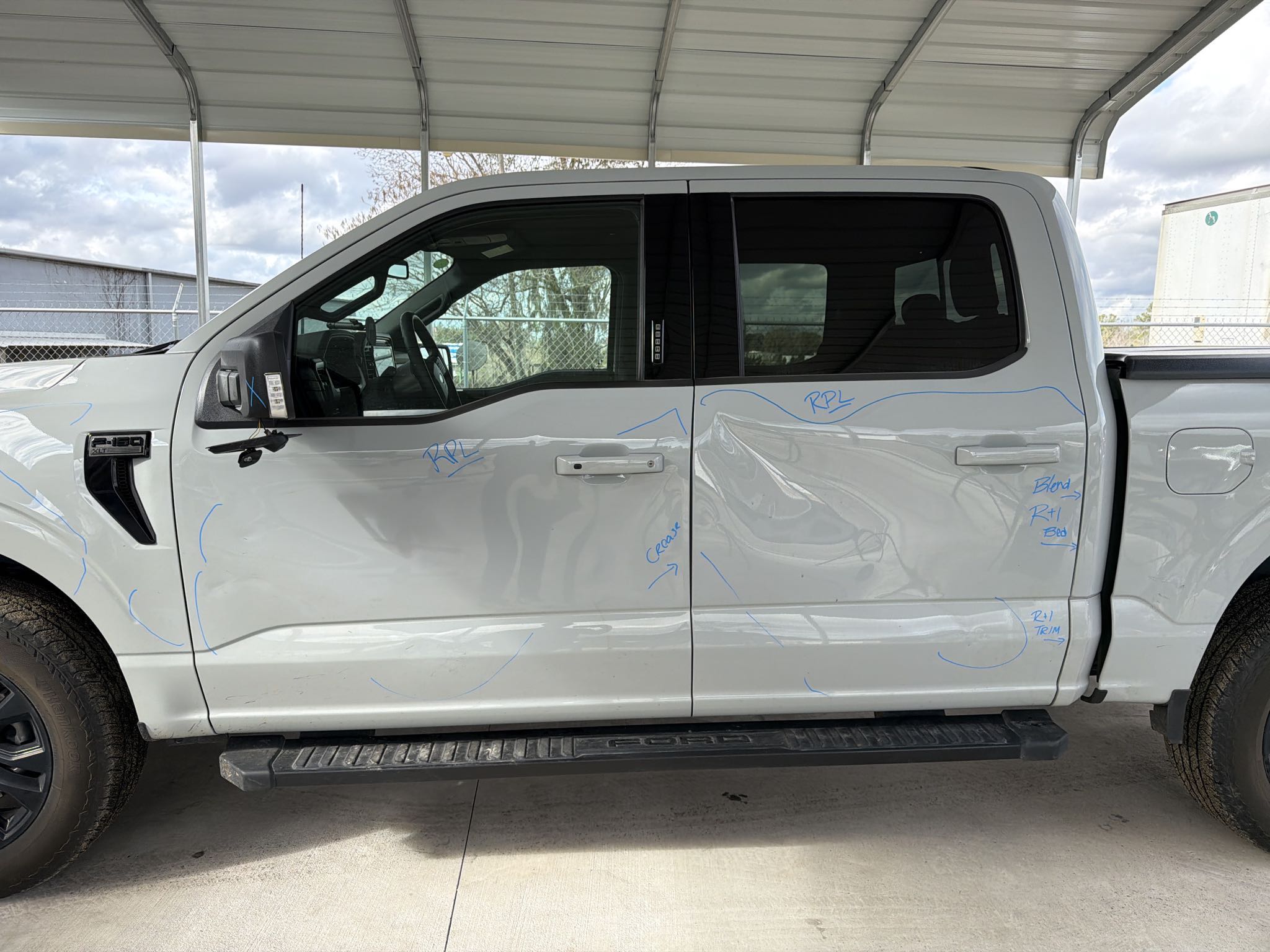
A deer weighing 100 to 180 pounds hitting your vehicle at highway speed transfers significant force into your hood, bumper, fenders, and the structural components beneath them. The visible damage — dented sheet metal, broken lights, cracked bumper covers — is only part of the story.
Hood latch mechanisms, radiator supports, front subframe components, and ADAS sensors can all sustain damage in a deer strike that isn't obvious from a walk-around inspection. Paint damage around impact points can also extend further than it appears under a parking lot light.
That's why we recommend bringing your vehicle to us for a thorough inspection even if the damage appears minor. Damage found during a proper teardown can be added to your supplement claim — hidden damage found after you've driven home is harder to recover.
ADAS Systems Need Inspection After Any Front-End Strike
Most vehicles built after 2018 have forward-facing cameras, radar modules, or ultrasonic sensors integrated into the front bumper, grille, windshield, or hood area. A deer strike affects exactly these areas.
Even if the sensor housing appears intact, the mounting point may have shifted enough to throw off calibration. An out-of-tolerance forward collision sensor may not trigger automatic emergency braking at the right moment. We inspect and recalibrate all affected ADAS systems as part of every front-end repair using dealership-grade calibration equipment.
Bring It In — Even If You Think the Damage Is Minor
Free estimates are available at Williams Paint & Body Shop with no appointment needed during business hours (Monday–Thursday 8am–5pm, Friday 8am–1pm). We photograph the damage, provide a written estimate, and can coordinate directly with your insurance company from there.
If your vehicle is not drivable, our towing partner Mallory Towing & Recovery provides 24-hour dispatch across Jackson County and the surrounding Florida Panhandle region. One call to us and we handle the logistics.

Williams Paint & Body Shop
I-CAR Gold Class certified collision repair in Marianna, FL — serving Jackson County and the Florida Panhandle since 2011. Free estimates available walk-in, Monday–Thursday 8am–5pm, Friday 8am–1pm. Call (850) 482-0332.
Bring us your dent.
We'll handle the rest.
Free estimate. Direct insurance work. Real OEM-spec repair, by certified technicians, in the heart of the Florida Panhandle.